Sixteen Pillars on a Yangpyeong Hillside: Rethinking Architecture and Nature
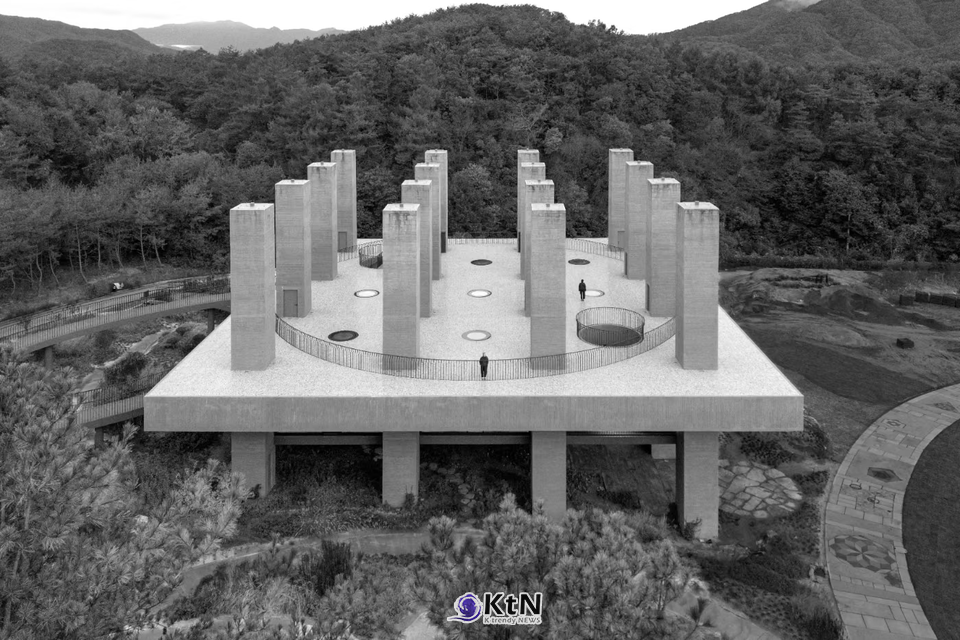
On a mountain slope in Yangpyeong, Gyeonggi Province, sixteen concrete pillars rise 10 meters above the ground. This is Über House at Médongaule Garden, designed by Chilean studio Pezo von Ellrichshausen, and it sits at the highest point of the garden.
Médongaule Garden is a long-term project that began in 2012. It opened its Korean Garden in September 2025 and has now unveiled its Contemporary Garden, where buildings and paths draw on thinkers such as Nietzsche, Plato and the Buddha.
Pillars, Slope and Shifting Views
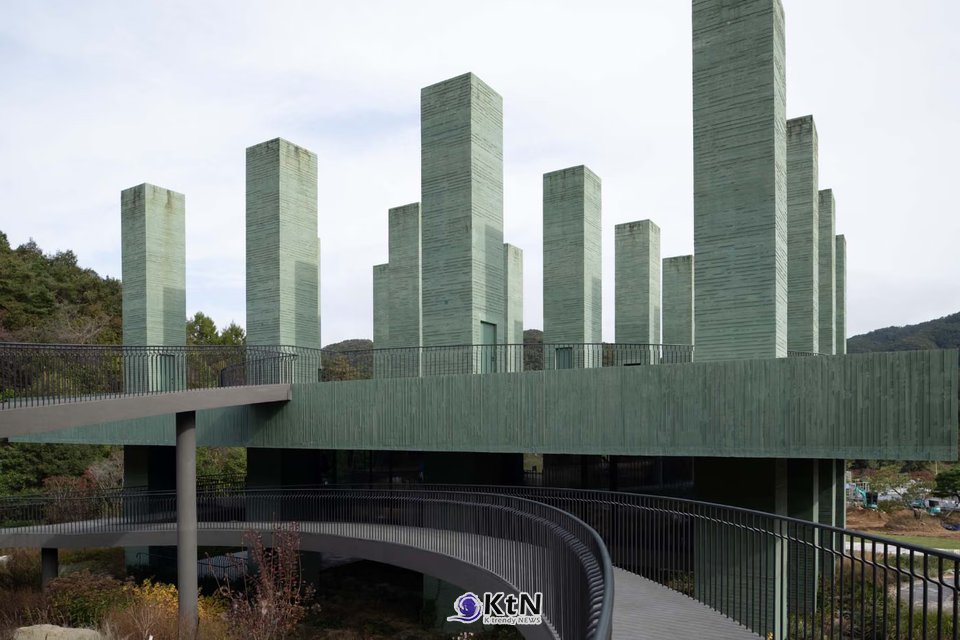
The house is built around sixteen rectangular pillars and a thick concrete slab. Its name comes from Nietzsche's concept of the Übermensch, but the building is best read through its structure rather than its title. The pillars both support the slab and define space, letting views pass between them and changing the sense of proportion depending on where you stand.
The building has three levels. The lowest follows the natural slope and takes the form of an open-air amphitheater facing the valley. The middle level, beneath the slab, holds space for dining and gatherings, with terraces at opposite corners. At the top, visitors look out over the garden and surrounding mountains from between the tall pillars.
The concrete is finished in pale green outside, while the interior uses dark oak and terrazzo. The green echoes the forest, yet the massive pillars make no attempt to hide their artificial nature. Landscape design involved French landscape architect Guillaume Gosse de Gorre, with Korean landscape architect Lee Jae-yeon also contributing to the garden's planting.
Environmental questions remain. Reinforced concrete requires energy-intensive materials, so sustainability depends on construction, maintenance and long-term use, not color alone. The building also serves as a venue for dining and events, which makes its operation part of how visitors experience it.
Why It Matters
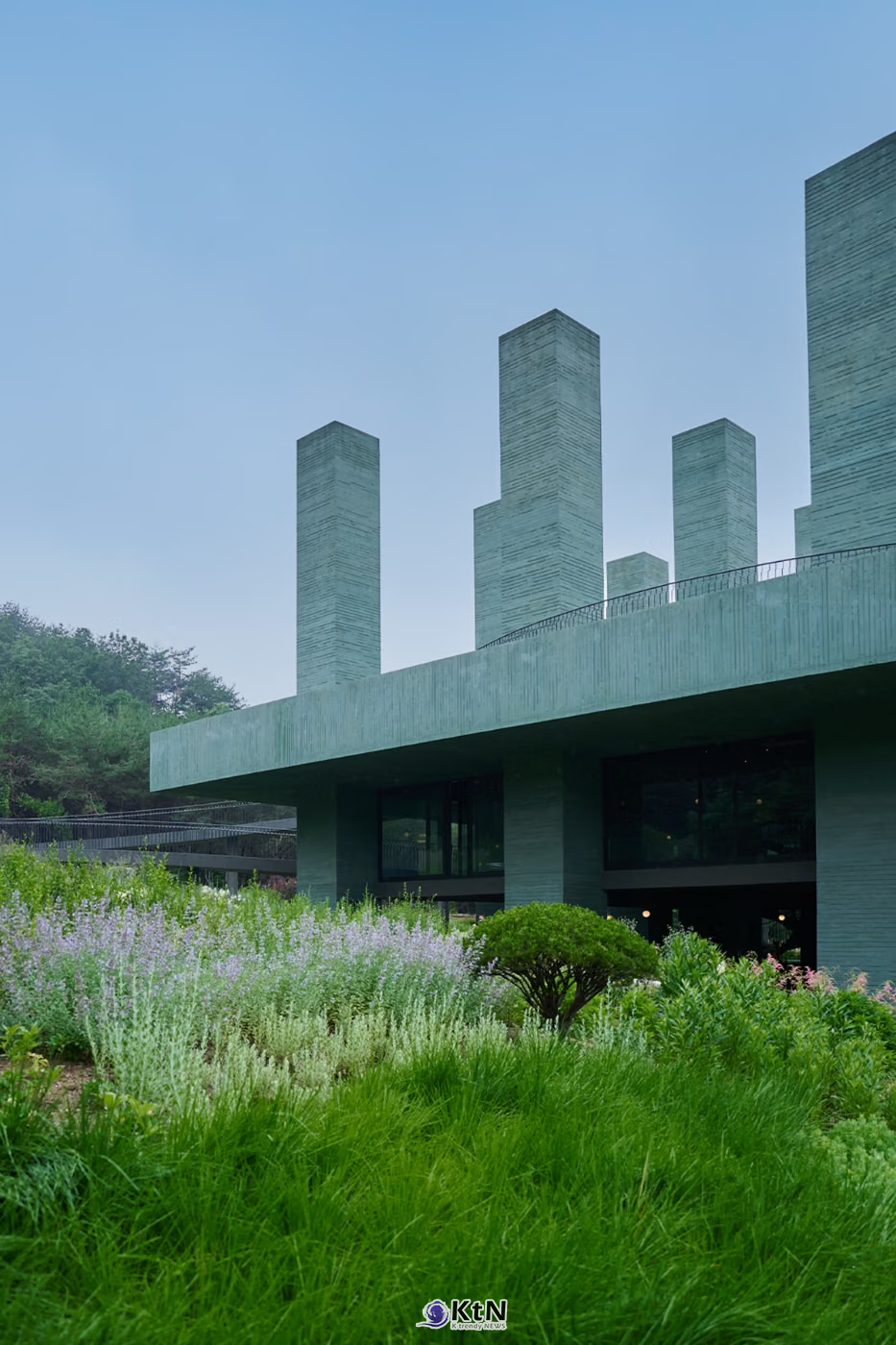
Über House offers a new vantage point on nature while showing how a bold structure can sit in a landscape. Its lasting value will depend on how it relates to the terrain, how people use it and how it endures alongside the surrounding environment.
Read the original article in Korean: K trendy NEWS


댓글
댓글 쓰기