Art Collaboration Kyoto Shares Booths, but Not Every Advantage
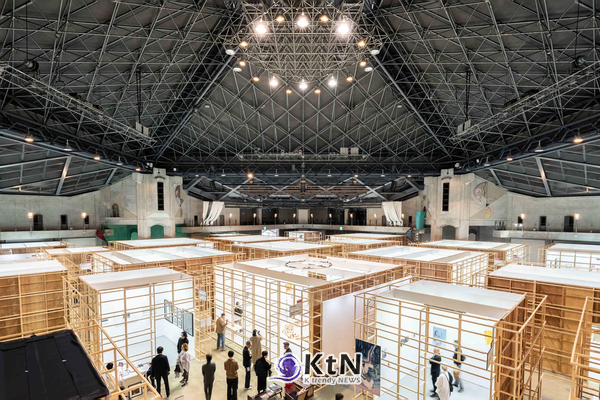
Art Collaboration Kyoto (ACK), the sixth edition of the international contemporary art fair held at Kyoto's National Kyoto International Conference Hall, runs through November 9 with 63 galleries from 18 countries and regions. Fifty-two of them take part in 'Gallery Collaborations,' where Japanese hosts share booths with galleries from abroad.
Shared Booths, Unequal Starting Points
Japanese galleries (25) and overseas galleries (27) formed 25 joint booths. Seoul's Gallery Hyundai and Tokyo Gallery + BTAP paired Korean artist Lee Seung-taek's 'bound stones' with works by Mono-ha artists Kishio Suga and Susumu Koshimizu, comparing how postwar East Asian art rethought sculpture. TARO NASU and Hauser & Wirth linked works by Louise Bourgeois, Jenny Holzer, Glenn Ligon and others through language.
Sharing a booth, however, does not mean sharing collector relationships, which galleries build over years. Large multinational galleries and smaller newcomers also gain differently. Of the 25 Japanese hosts, 21 are based in Tokyo, three in Kyoto and one in Osaka, so the commercial network behind a Kyoto fair is concentrated elsewhere. The fair has also shrunk from 72 galleries last year to 63 as booth sizes grew.
Other features include a bonded exhibition status held for a fifth straight year, which defers import taxes and customs procedures for works brought from abroad, though Japan's 10% consumption tax still applies to completed sales. A new 'ACK Intersection' curated show, 'Out of Bounds,' sits outside the commercial booths, and the fair moved to a seven-member joint management team in April.
Why It Matters
ACK shows how joint booths can create real curatorial dialogue between galleries, yet commercial benefits remain uneven. Whether Kyoto itself gains lasting market strength, rather than serving only as a host city, is the question to watch.
Read the original article in Korean: K trendy NEWS


댓글
댓글 쓰기