US Court Tosses Copyright Suit Against Trot Star Song Ga-in, Warns Plaintiff Over AI Misuse

A US federal court has dismissed a copyright infringement lawsuit against Korean singer Song Ga-in, ruling that it had no jurisdiction over the case. The judge also warned the plaintiff that repeatedly filing poorly drafted, AI-generated legal documents could lead to sanctions.
A Korean Song, a California Courtroom
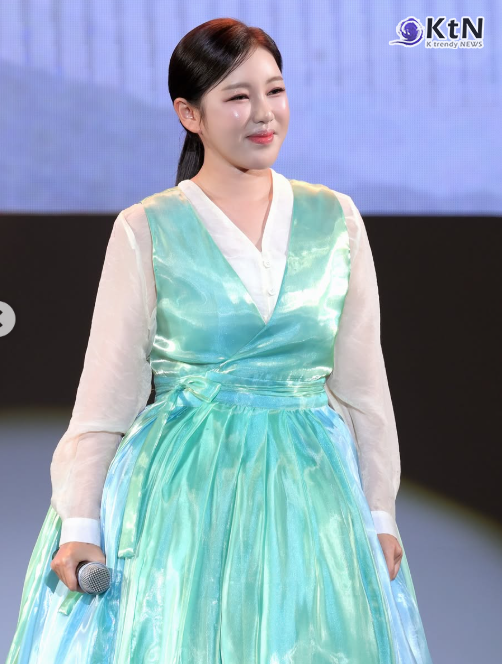
The dispute centers on 'Danjangui Miari Gogae,' a classic Korean song. According to Song's agency, JG Star, the federal district court for the Central District of California dismissed the case on August 27, local time, because a case involving a Korean singer and broadcasts in Korea does not fall under US jurisdiction. JG Star announced the ruling in an official statement on October 21.
The plaintiff, identified only by his surname Lee, says he is the son of the late composer Lee Jae-ho, who wrote the song, and that he legally inherited the copyright from his mother. He took issue with Song singing the song on Korean television and repeatedly pressed JG Star for payment framed as royalties. The agency declined, saying there was not enough objective evidence to prove his rights.
After negotiations in Korea broke down, Lee filed in California, arguing that Korean broadcast footage can be watched in the US through global platforms such as YouTube. The defendants reportedly included other trot (Korean pop-ballad) singers who have performed the song, such as Kim Yon-ja and Jang Yoon-jung, as well as Korean broadcasters. The filing appears to have been an attempt to use the US legal system, with its punitive damages, as leverage.
The court found that Lee had submitted legal papers drafted with AI tools that were of poor quality, and it treated this as an abuse of litigation.
JG Star says it will not give in to similar demands and will keep a firm legal stance to protect its artists' broadcast and performance activities unless clear legal evidence is presented.
Why It Matters
The ruling shows that courts are growing less tolerant of sloppy AI-generated filings, and it signals that borderless streaming does not automatically open the door to foreign courts. For K-culture, it reinforces the position of agencies against opportunistic claims.
Read the original article in Korean: K trendy NEWS


댓글
댓글 쓰기