Jeon Kyung-sun's Early Sculptures: Childhood Isolation Meets Birds and Leaves
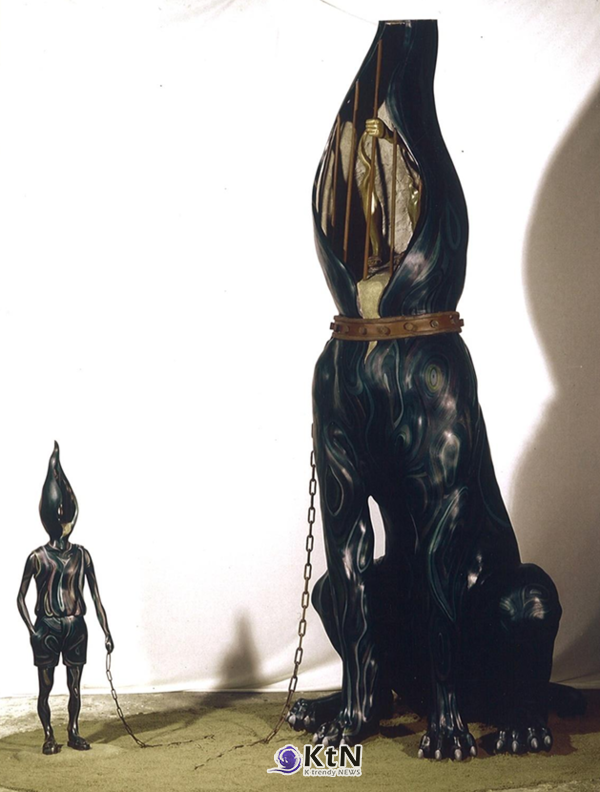
Korean sculptor Jeon Kyung-sun began her career by placing tiny humans beside towering animals, reversing the usual order of the world. Her early works trace how a childhood spent feeling out of place within her family grew into a lifelong interest in beings that people tend to overlook.
From Coexistence to Cold City
In 'Coexistence' (2000), a small, slender human figure stands next to a huge, dark animal made of FRP (fiber-reinforced plastic) with acrylic paint. The animal's body contains human-like structures, and a chain hangs from its neck. Because the human is the smaller presence, viewers meet the animal's weight first.
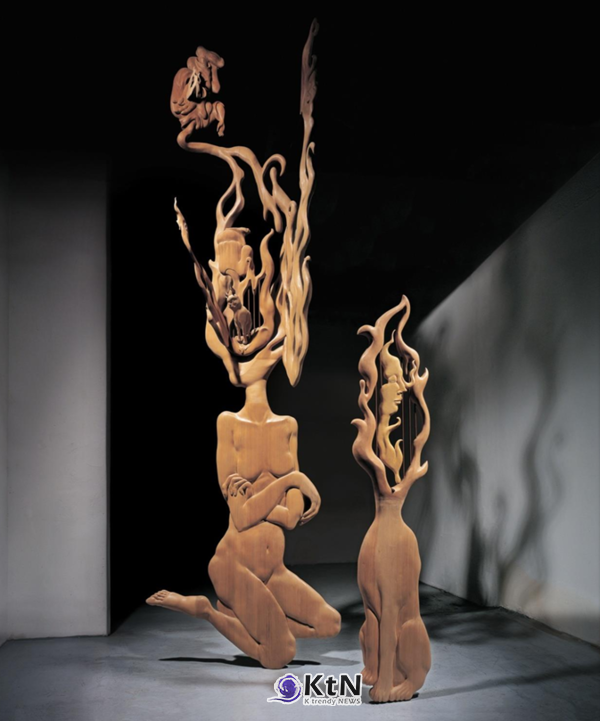
By 2009, in 'Coexistence-The Form of Memory,' the approach changes. This 350 cm wooden piece lets a bent human body rise into trunk- and branch-like forms, so human and natural shapes merge into one vertical structure.
'A Memory Under Umbrella' (2010) gathers several figures around a large red umbrella. They share a space, yet each keeps a separate posture and position, and none directly touch. In 'Cold City' (2012), faces and bodies are split apart, and figures and a small animal sit far from one another in a wide space, echoing the distance between people.
Jeon has written in her artist's note that nature was a refuge in childhood. When she could not find her place at home, she watched birds, swaying leaves and small creatures and invented stories from them. Those birds and leaves kept returning in her work, and the same attention extended to animals and objects pushed aside by human eyes.
Why It Matters
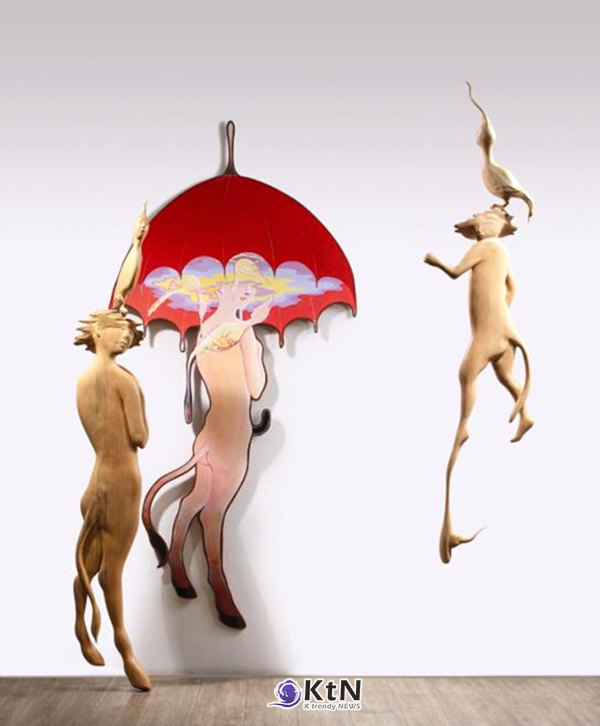
Jeon's sculptures show how a personal memory of exclusion can become a visual language about relationships, whether between humans and animals, humans and nature, or people and each other. Following the shift from size contrast to fused bodies to deliberate gaps offers a clear way to read her work.
Read the original article in Korean: K trendy NEWS


댓글
댓글 쓰기